


Philae Temple: The Complete Visitor's Guide to Egypt's Island Temple of Isis
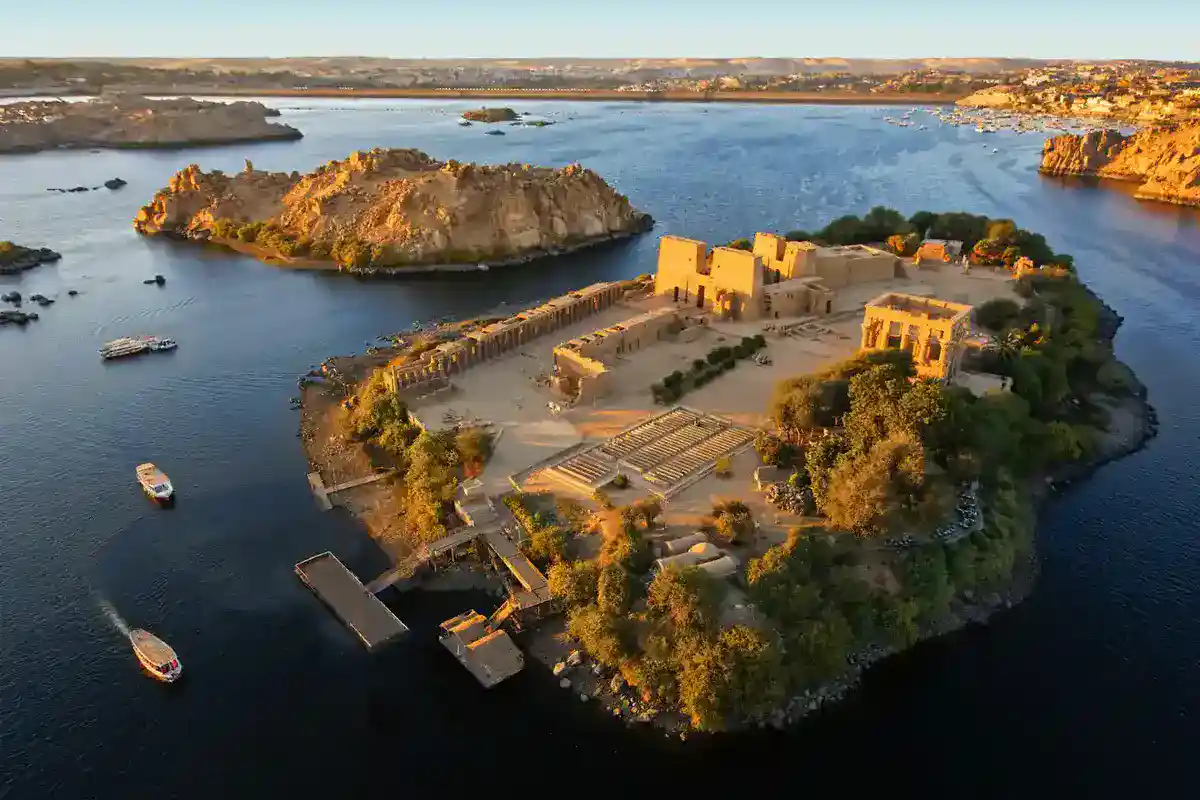
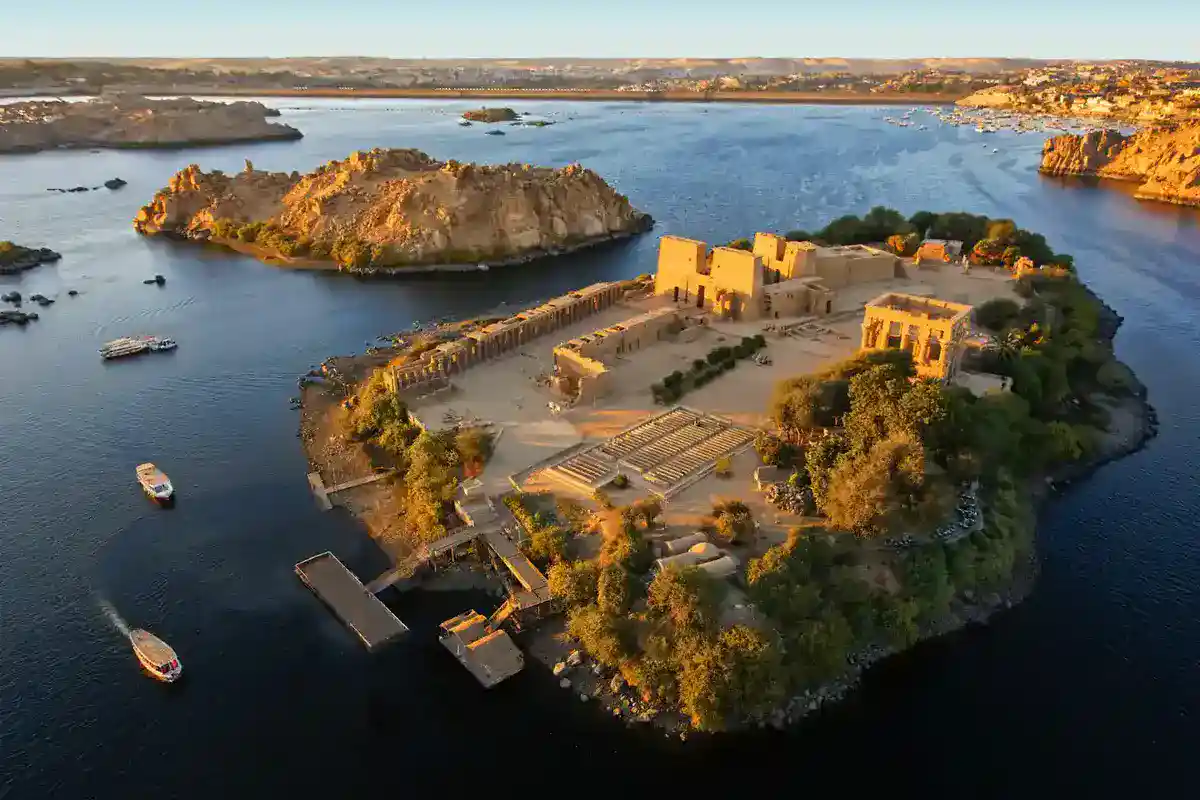
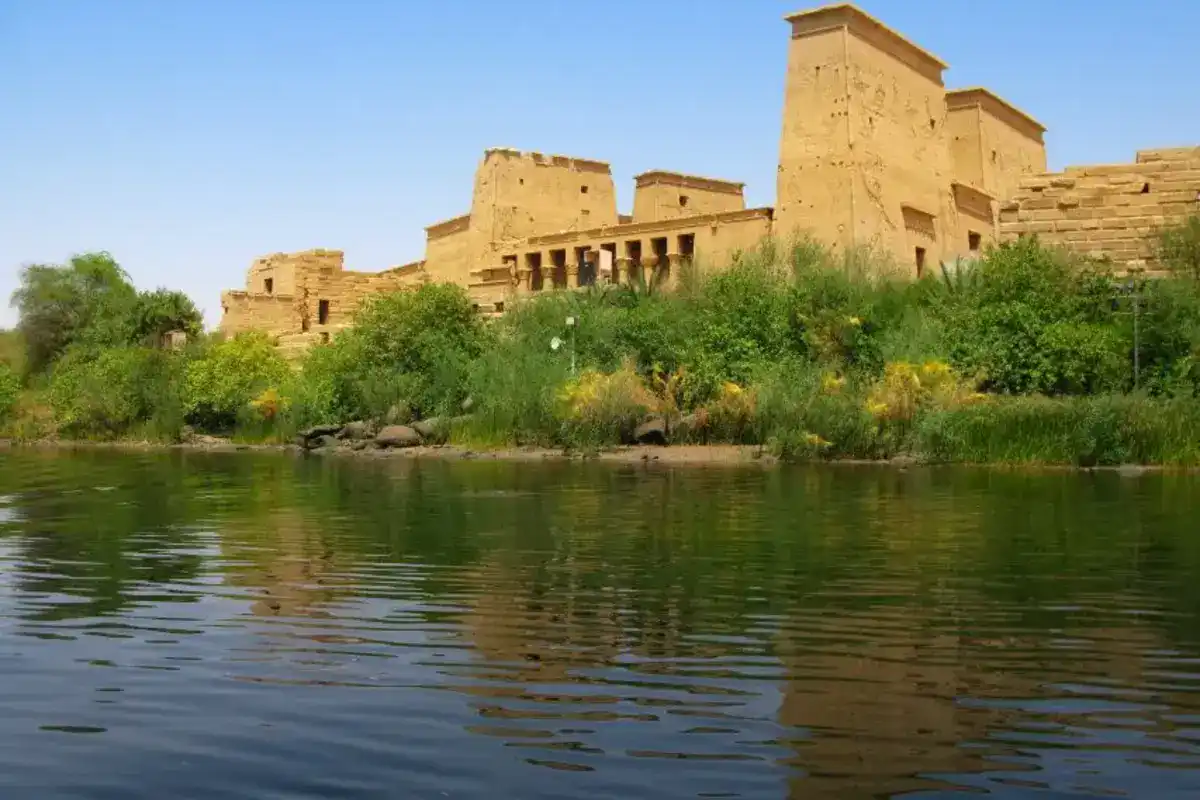
Nestled on the picturesque Agilkia Island near Aswan, Philae Temple is one of the most enchanting ancient monuments in Egypt. Surrounded by the tranquil waters of the Nile, this magnificent temple complex is dedicated primarily to Isis, the beloved goddess of magic, healing, motherhood, and protection. The journey to the temple begins with a short motorboat ride, making every visit a memorable experience before visitors even step onto the island.
Unlike many ancient Egyptian temples, Philae Temple is not located on its original site. During the construction of the Aswan High Dam in the 20th century, the entire complex faced the threat of permanent flooding. In one of the greatest archaeological rescue projects ever undertaken, UNESCO led an international campaign to carefully dismantle and reconstruct the temple on the nearby Agilkia Island. Thanks to this extraordinary effort, visitors today can admire one of Egypt's best-preserved temples exactly as generations have done for centuries.
The temple showcases a remarkable blend of Ancient Egyptian, Greek, and Roman architecture, reflecting the cultural changes that shaped Egypt during the Ptolemaic and Roman periods. Beautiful pylons, elegant courtyards, sacred sanctuaries, detailed hieroglyphics, and towering columns tell the story of a civilization that continued to honor its ancient gods long after much of Egypt had changed.
Philae Temple also marks the final chapter of ancient Egyptian religion. It remained one of the last active centers of worship dedicated to Isis until the 6th century AD, when Christianity gradually replaced the ancient beliefs. Today, visitors can even see evidence of this transition, with parts of the temple converted into an early Christian church.
Whether you are passionate about archaeology, fascinated by Egyptian mythology, or simply looking for one of the most beautiful places along the Nile, Philae Temple offers an unforgettable journey through more than two thousand years of history. Its stunning riverside setting, remarkable preservation, and captivating legends make it one of the highlights of any visit to Aswan and a must-see attraction on every Egypt itinerary.
History of Philae Temple
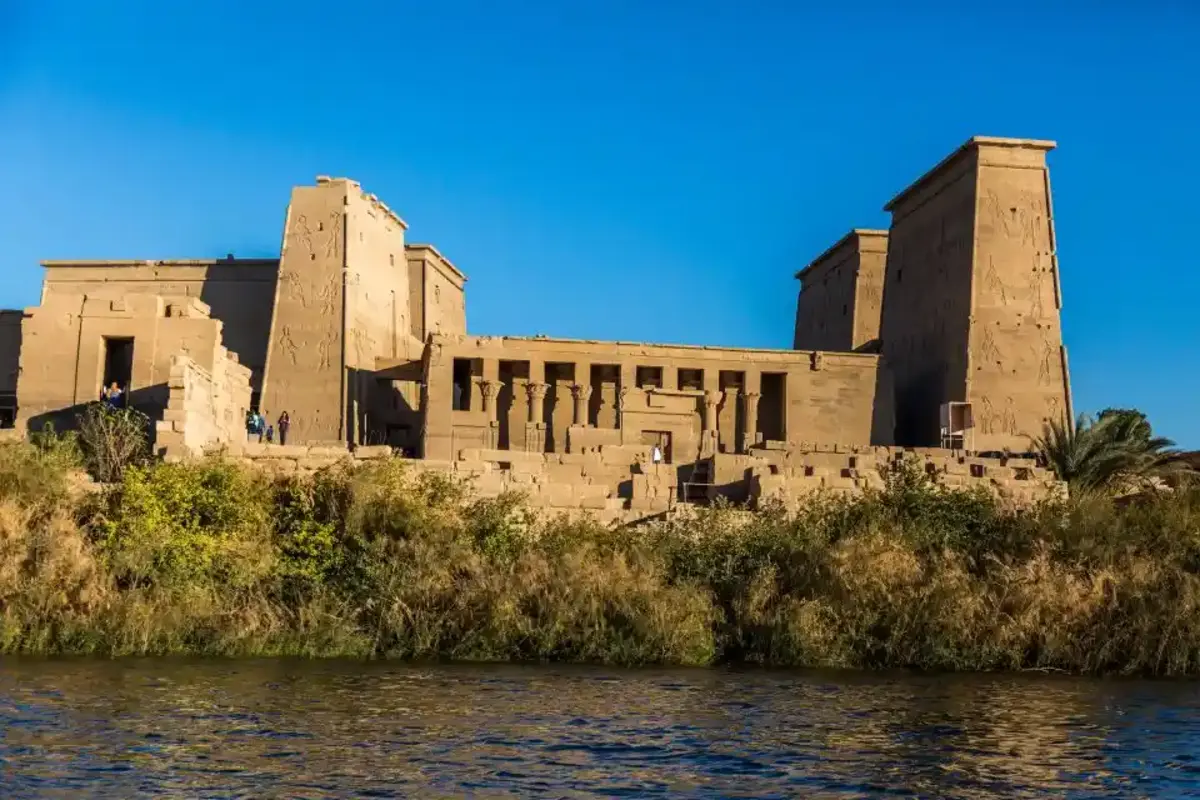
Philae Temple has one of the most fascinating histories among all ancient Egyptian monuments. Although many visitors admire its beauty today, the story behind the temple is just as extraordinary as its impressive architecture. From its origins in ancient Egypt to its dramatic rescue by UNESCO, Philae Temple represents thousands of years of religious devotion, cultural transformation, and international cooperation.
The island of Philae had been regarded as a sacred place long before the construction of the current temple complex. Ancient Egyptians believed it was closely connected to the legendary story of Osiris, Isis, and Horus, one of the most important myths in Egyptian religion. According to tradition, Isis found the body of her husband Osiris after he was murdered by his brother Seth, making Philae one of the holiest pilgrimage destinations in ancient Egypt.
Construction of the main temple began during the reign of Ptolemy II Philadelphus in the 3rd century BC. Successive Ptolemaic rulers expanded the complex by adding monumental gateways, elegant courtyards, shrines, and sanctuaries dedicated to Isis and other deities. Even after Egypt became part of the Roman Empire, emperors including Augustus, Tiberius, Hadrian, and Trajan continued building and decorating the temple, demonstrating the enduring importance of Isis worship.
For centuries, pilgrims traveled from across Egypt and neighboring Nubia to worship at Philae. The temple became one of the last strongholds of ancient Egyptian religion. While Christianity spread throughout Egypt, traditional ceremonies dedicated to Isis continued here until the reign of Emperor Justinian I in the 6th century AD. Eventually, the temple was closed, and parts of the complex were transformed into a Christian church, preserving another chapter of its remarkable history.
Perhaps the most dramatic event in the temple's long history occurred during the 20th century. After the construction of the original Aswan Dam in 1902, Philae Island was submerged for much of the year, causing significant damage to its monuments. The later construction of the Aswan High Dam threatened to permanently flood the temple forever.
Between 1972 and 1980, UNESCO launched one of the world's greatest archaeological rescue missions. Thousands of carefully numbered stone blocks were dismantled, transported, and reassembled on the higher Agilkia Island. The new location was designed to closely resemble the original landscape, ensuring future generations could continue to admire this masterpiece of ancient architecture.
Today, Philae Temple stands not only as one of Egypt's most beautiful ancient sites but also as a symbol of global efforts to preserve humanity's shared cultural heritage.
The Myth of Isis and Osiris: Why Philae Temple Was Sacred
To truly appreciate the significance of Philae Temple, it is important to understand the legendary story of Isis, Osiris, and Horus, one of the most influential myths in ancient Egyptian religion. This timeless tale shaped Egyptian beliefs about kingship, life after death, and the eternal struggle between good and evil, making Philae one of the holiest religious sites in the country.
According to ancient Egyptian mythology, Osiris was the wise and just king of Egypt who taught his people agriculture, justice, and civilization. His jealous brother, Seth, desired the throne and devised a cruel plan to seize power. Seth tricked Osiris into lying inside a beautifully crafted chest, sealed it shut, and cast it into the Nile River.
Devastated by the loss of her husband, Isis began a long journey across Egypt in search of Osiris. Her unwavering love and determination eventually led her to recover his body. However, Seth discovered the body, cut it into many pieces, and scattered them throughout Egypt.
Using her magical powers, Isis searched tirelessly for the missing pieces of Osiris. With the help of her sister Nephthys and the jackal-headed god Anubis, she restored his body and briefly brought him back to life. During this miraculous moment, Isis conceived their son, Horus.
Horus later grew into a powerful warrior who challenged Seth for the throne of Egypt. After many fierce battles, Horus emerged victorious and became the rightful ruler, symbolizing the triumph of order over chaos. Osiris, meanwhile, became the ruler of the Underworld and the judge of the dead, overseeing the eternal afterlife.
Ancient Egyptians believed that Philae Island was closely connected to this sacred story. The island became one of the principal centers dedicated to Isis, attracting pilgrims from across Egypt and Nubia who came to seek healing, protection, blessings, and spiritual guidance. Festivals honoring Isis filled the temple with music, incense, prayers, and elaborate religious ceremonies.
Even after Egypt came under Greek and Roman rule, devotion to Isis continued to grow. Her influence spread far beyond Egypt, and temples dedicated to her were built throughout the Mediterranean world, from Greece to Italy. Yet Philae remained the most sacred sanctuary of all, serving as the heart of her worship until the 6th century AD.
Today, visitors walking through the temple can still admire beautifully preserved reliefs depicting Isis nursing the young Horus, Osiris seated as king of the afterlife, and scenes celebrating the divine family that inspired generations of believers for more than two thousand years.
Architecture of Philae Temple
Philae Temple is widely regarded as one of the finest examples of Ptolemaic and Roman temple architecture in Egypt. Although inspired by traditional Egyptian temple design, the complex also incorporates elegant Greek and Roman artistic influences, reflecting the multicultural character of Egypt during the final centuries of ancient civilization.
The temple complex occupies most of Agilkia Island and is carefully aligned along a central ceremonial axis that guides visitors through a sequence of monumental gateways, spacious courtyards, magnificent halls, and sacred sanctuaries. Every section was designed to impress worshippers while emphasizing the spiritual journey toward the sanctuary of Isis.
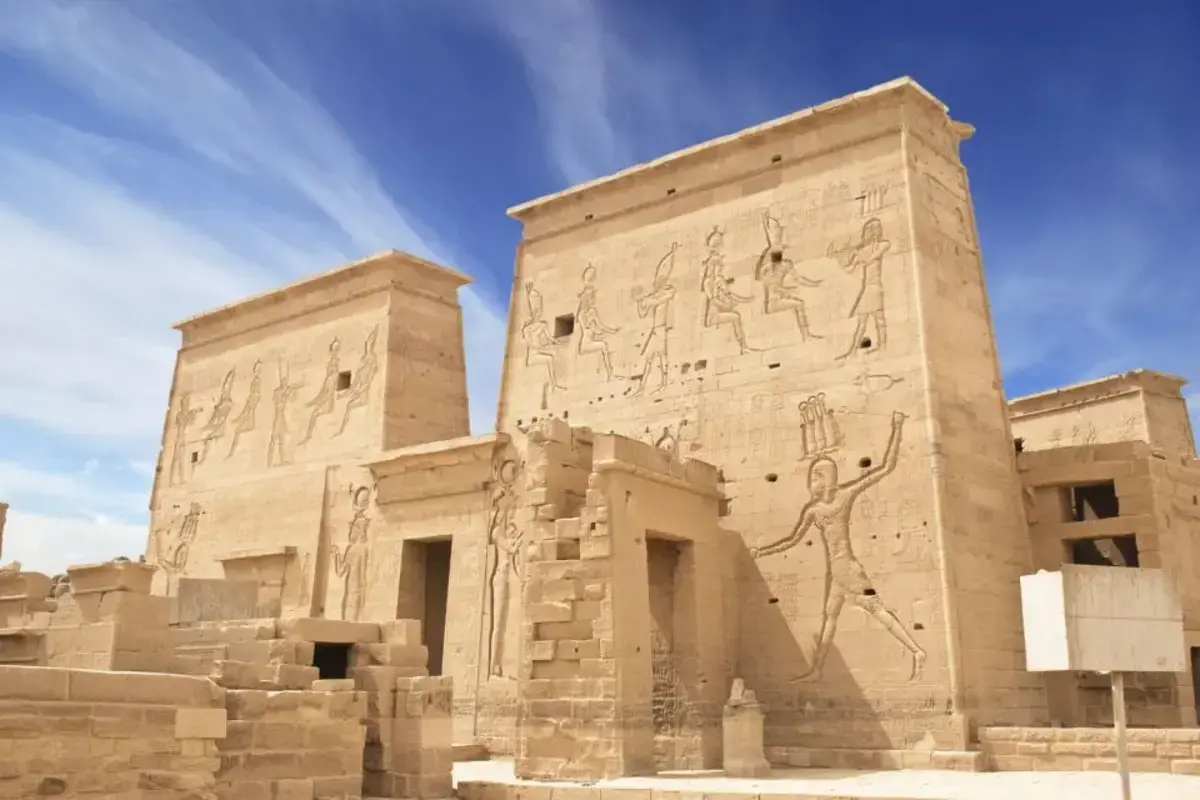
One of the most striking features is the First Pylon, a massive entrance gateway decorated with towering reliefs of Ptolemaic kings making offerings to Isis, Horus, and other Egyptian gods. Two impressive towers flank the gateway, creating a dramatic entrance visible from the Nile as visitors arrive by boat.
Beyond the First Pylon lies a large open courtyard surrounded by graceful colonnades. This area once hosted religious ceremonies, processions, and gatherings of priests and pilgrims. The columns are richly decorated with floral capitals inspired by lotus and papyrus plants, symbols of life and rebirth in ancient Egypt.
The temple's Hypostyle Hall features beautifully carved columns supporting a massive stone roof. Sunlight filtering between the columns creates an unforgettable atmosphere, highlighting intricate hieroglyphics that record royal offerings, religious rituals, and scenes from Egyptian mythology.
At the heart of the complex lies the Sanctuary of Isis, the most sacred chamber where the cult statue of the goddess once stood. Only high priests and members of the royal family were permitted to enter this holy space, where daily rituals honored the goddess with prayers, incense, and offerings.
Throughout the complex, visitors will also discover elegant chapels, smaller shrines, ceremonial gateways, sacred kiosks, and beautifully carved walls depicting gods, pharaohs, and important religious festivals. Every relief tells a story, making the temple an extraordinary open-air museum of ancient Egyptian art.
Despite being dismantled and reconstructed stone by stone during the UNESCO rescue project, the temple retains its original grandeur. Walking through Philae today offers an authentic glimpse into the architectural brilliance of ancient Egypt and the enduring legacy of one of its most beloved sacred sites.
Top Things to See at Philae Temple
Philae Temple is more than a single monument—it's a remarkable temple complex filled with beautifully preserved structures, sacred shrines, and intricate carvings. As you explore the island, each section reveals another chapter of Egypt's ancient history and mythology. Here are the highlights you should not miss.
First Pylon
The First Pylon serves as the grand entrance to Philae Temple and is one of its most recognizable landmarks. Rising approximately 18 meters (59 feet) high, its two massive towers create an impressive gateway overlooking the Nile.
The walls are decorated with scenes of Ptolemaic rulers presenting offerings to the gods. One of the most striking reliefs depicts the king defeating Egypt's enemies before Isis, Horus, and Hathor, symbolizing the triumph of order over chaos.
Before entering, take a moment to admire the detailed hieroglyphics and the spectacular setting, especially in the early morning or late afternoon when the sunlight illuminates the sandstone.
The Open Courtyard
Beyond the First Pylon lies a spacious courtyard surrounded by elegant colonnades. This peaceful area was once the gathering place for priests, pilgrims, and religious processions during festivals honoring the goddess Isis.
Each column features beautifully carved floral capitals inspired by lotus flowers, papyrus plants, and palm trees. As you walk through the courtyard, you'll notice reliefs depicting offerings, ceremonies, and royal rituals that have survived for more than two thousand years.
The Second Pylon
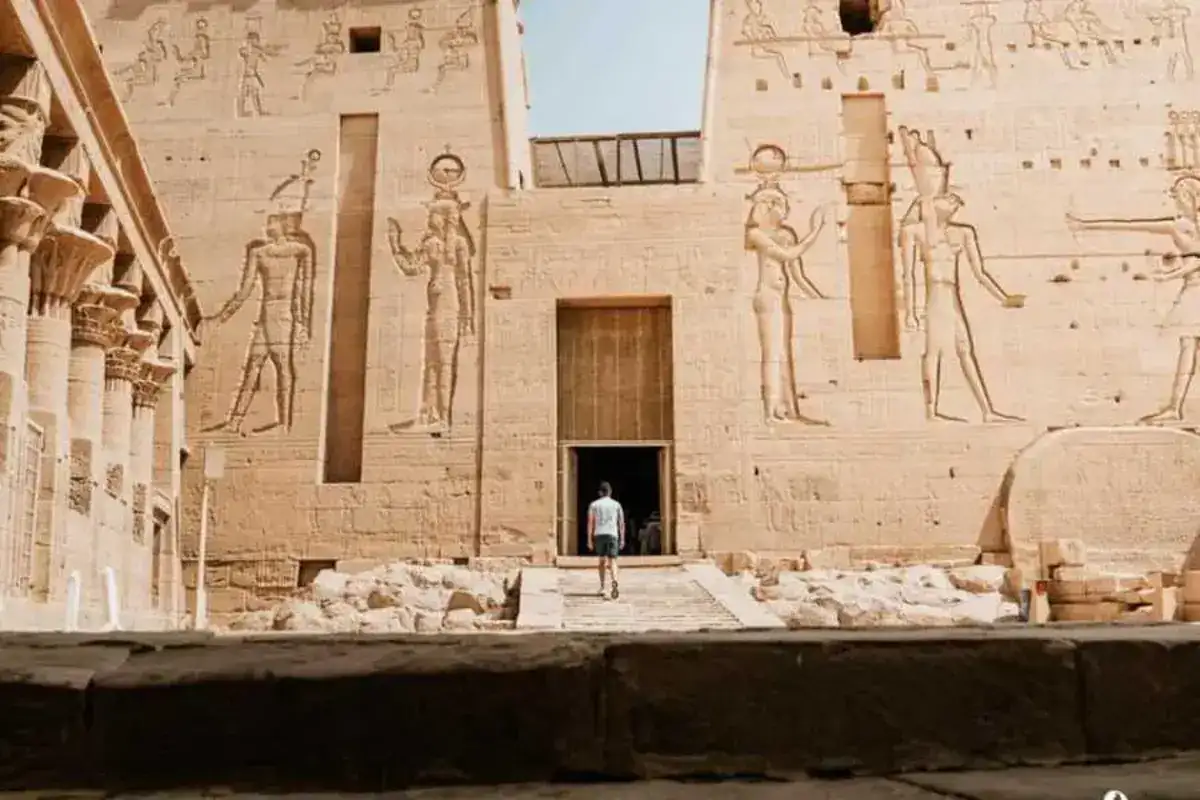
The Second Pylon marks the entrance to the temple's inner sacred areas. Although smaller than the First Pylon, it is equally impressive thanks to its remarkably preserved carvings.
Its walls depict important religious ceremonies involving Isis, Horus, and Osiris. Many visitors consider these reliefs among the finest examples of Ptolemaic temple art because of their exceptional detail and craftsmanship.
The Hypostyle Hall
The Hypostyle Hall is one of the architectural highlights of Philae Temple. Its beautifully decorated columns support a massive stone roof, creating an atmosphere that feels both majestic and peaceful.
The walls are covered with hieroglyphics describing religious rituals, offerings to the gods, and scenes celebrating Isis. Even after centuries, many of the carvings remain incredibly well preserved.
Look closely at the capitals of the columns, as each one features a unique design inspired by plants that symbolized life and renewal in ancient Egyptian culture.
The Sanctuary of Isis
At the heart of the temple lies the Sanctuary of Isis, the holiest place within the complex.
This sacred chamber once housed the cult statue of the goddess Isis, where only high priests and selected members of the royal family could enter. Daily rituals included prayers, incense, music, and offerings intended to honor the goddess and maintain harmony between the divine and human worlds.
Standing inside the sanctuary provides a sense of the profound spiritual importance the temple held for ancient Egyptians.
Trajan's Kiosk
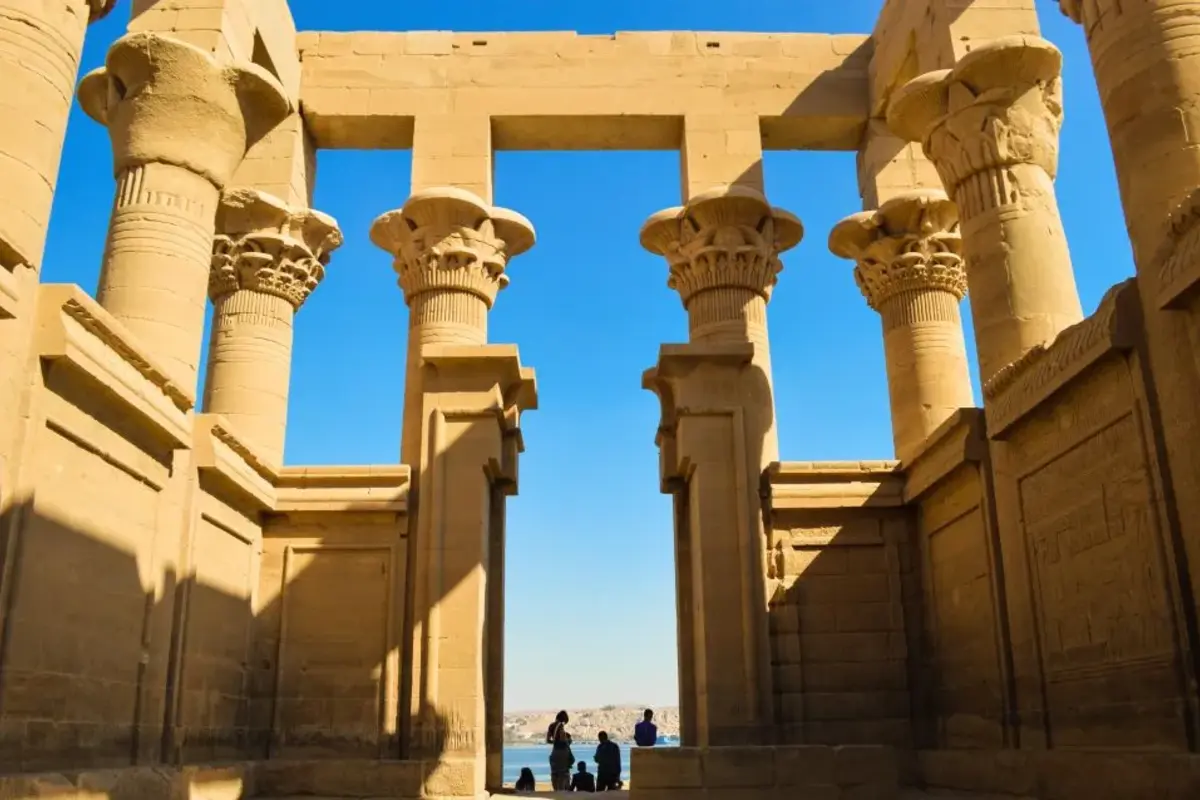
One of the most photographed monuments at Philae is Trajan's Kiosk, often called Pharaoh's Bed.
Located near the waterfront, this elegant open pavilion was built during the reign of the Roman Emperor Trajan in the early 2nd century AD. Its graceful columns and unique design distinguish it from the rest of the temple complex.
The kiosk likely served as a ceremonial landing place where the sacred boat of Isis arrived during important religious festivals. Today, it remains one of the most iconic symbols of Philae Temple and offers spectacular photo opportunities with the Nile in the background.
Temple of Hathor
A short walk from the main temple leads to the charming Temple of Hathor, dedicated to the goddess of love, beauty, music, joy, and motherhood.
Unlike the larger structures, this temple has a more intimate atmosphere. Its walls are decorated with musicians, dancers, and festive scenes, reflecting Hathor's role as the patroness of celebration and happiness.
The detailed carvings provide valuable insight into ancient Egyptian music and religious festivals.
The Birth House (Mammisi)
The Birth House, known as the Mammisi, celebrates the divine birth of Horus, the son of Isis and Osiris.
Its beautifully carved reliefs illustrate the mythical birth and childhood of Horus, emphasizing his destiny as the rightful ruler of Egypt. These scenes highlight the importance of royal legitimacy and divine kingship in ancient Egyptian belief.
Christian Churches and Coptic Inscriptions
Philae Temple also preserves evidence of Egypt's transition from ancient religion to Christianity.
During the 6th century AD, parts of the temple were converted into Christian churches. Visitors can still see Coptic crosses carved into the stone and areas where ancient pagan reliefs were intentionally altered.
These fascinating details demonstrate how the site evolved through different historical periods while continuing to serve as a place of worship.
The variety of monuments within Philae Temple makes it one of Egypt's most rewarding archaeological sites. From monumental gateways and sacred sanctuaries to Roman additions and Christian churches, every corner of the complex tells a unique story spanning more than two millennia.
How to Visit Philae Temple
Visiting Philae Temple is one of the highlights of any trip to Aswan. Unlike most ancient Egyptian temples, the complex is located on Agilkia Island, meaning every visit begins with a scenic boat ride across the Nile. The combination of stunning natural surroundings and remarkable ancient architecture creates an unforgettable experience.
How to Get to Philae Temple
Philae Temple is situated approximately 12 kilometers (7.5 miles) south of Aswan city center. Visitors first travel by car or taxi to Philae Marina, where motorboats transport passengers to Agilkia Island. The boat ride usually takes 5 to 10 minutes and offers beautiful views of the Nile and the temple as it comes into sight.
Most travelers visit the temple as part of a guided Aswan sightseeing tour, although independent visitors can easily arrange transportation and a boat at the marina.
Philae Temple Opening Hours
Philae Temple is open daily throughout the year.
Opening Hours
Daily: 6:00 AM – 5:00 PM
Arriving early in the morning is highly recommended to enjoy cooler temperatures, softer lighting for photography, and fewer visitors.
Philae Temple Tickets
Entrance fees are determined by the Egyptian Ministry of Tourism and Antiquities and may change over time.
Typically, separate tickets are available for:
- Adult international visitors.
- International students (with a valid student ID).
- Egyptian citizens and residents.
Keep in mind that the motorboat ride to Agilkia Island is not included in the entrance ticket and is paid separately.
Best Time to Visit Philae Temple
The ideal time to visit Philae Temple is between October and April, when temperatures are pleasant for exploring outdoor archaeological sites.
For the best experience:
- Visit early in the morning for cooler weather.
- Late afternoon also offers beautiful golden light for photography.
- Avoid midday during the summer months, when temperatures in Aswan can exceed 40°C (104°F).
How Long Should You Spend at Philae Temple?
Most visitors spend 1.5 to 2.5 hours exploring the temple complex.
Photography enthusiasts, history lovers, and travelers who wish to appreciate every detail may spend even longer admiring the carvings, architecture, and peaceful island setting.
Tips for Visiting Philae Temple
A little preparation can make your visit even more enjoyable.
- Wear lightweight, breathable clothing suitable for warm weather.
- Choose comfortable walking shoes, as the temple grounds are paved with ancient stone.
- Bring a hat, sunglasses, and sunscreen, especially during the warmer months.
- Carry a bottle of water to stay hydrated.
- Don't forget your camera or smartphone—the temple offers spectacular photo opportunities from both the boat and the island.
- Hire a knowledgeable Egyptologist guide if you want a deeper understanding of the mythology, history, and symbolism behind the temple's reliefs.
- Consider attending the Philae Sound and Light Show in the evening for a unique perspective on the temple's history.
These simple tips will help you enjoy one of Egypt's most beautiful and historically significant ancient monuments while making the most of your visit.
Why Visit Philae Temple?
Philae Temple is one of Egypt's most captivating ancient monuments, offering a unique combination of history, mythology, architecture, and breathtaking natural beauty. Unlike many archaeological sites, the experience begins with a peaceful boat ride across the Nile, setting the stage for an unforgettable visit.
The temple is renowned for its exceptional preservation, allowing visitors to admire intricate hieroglyphics, towering columns, monumental gateways, and sacred sanctuaries much as they appeared over two thousand years ago. Every corner of the complex reflects the artistic and engineering achievements of the ancient Egyptians, Greeks, and Romans.
Philae Temple also holds immense religious significance. As the most important sanctuary dedicated to the goddess Isis, it was a major pilgrimage destination and one of the last places where the ancient Egyptian religion continued to flourish. Walking through its halls offers a rare opportunity to connect with one of the world's oldest civilizations and its enduring spiritual traditions.
In addition to its historical importance, the temple's picturesque location on Agilkia Island creates a tranquil atmosphere unlike any other archaeological site in Egypt. Surrounded by the sparkling waters of the Nile and framed by granite islands, Philae Temple is a paradise for photographers, history enthusiasts, and travelers seeking unforgettable experiences.
Whether you are visiting Aswan for a day or exploring Egypt on a longer itinerary, Philae Temple deserves a place at the top of your travel list.
Conclusion
Philae Temple is one of Egypt's most remarkable archaeological treasures, combining ancient mythology, magnificent architecture, and a stunning island setting. Dedicated to the goddess Isis and preserved through one of UNESCO's greatest rescue projects, the temple offers visitors an extraordinary journey through more than two thousand years of history.
From the impressive First Pylon and elegant Hypostyle Hall to the sacred Sanctuary of Isis and the iconic Trajan's Kiosk, every part of the complex reveals the artistic brilliance and spiritual traditions of ancient Egypt. Its peaceful location on Agilkia Island adds to its charm, making every visit both educational and unforgettable.
Whether you are planning your first trip to Egypt or returning to discover more of its incredible heritage, Philae Temple is an attraction that should not be missed. It remains one of the finest examples of ancient Egyptian civilization and one of the highlights of any visit to Aswan.